Reminder: I’m doing a series of posts on the Terra Foundation Grant I received in April of 2024. “The Terra Foundation Residential Grant provides $1,000 for native plant material to install a new garden where turf has been removed in a home landscape. The Terra Foundation is committed to biodiversity and water conservation.” The grant had extra requirements in six categories, and I am devoting at least one blog post to each of those. In addition, I plan to do some reflecting on the whole process and what I have planned next for my garden.
This post’s theme: e. Purchasing plants from local growers (one of the requirements to fulfill the grant). Y’all. You have no idea what a rabbit hole this is for me.
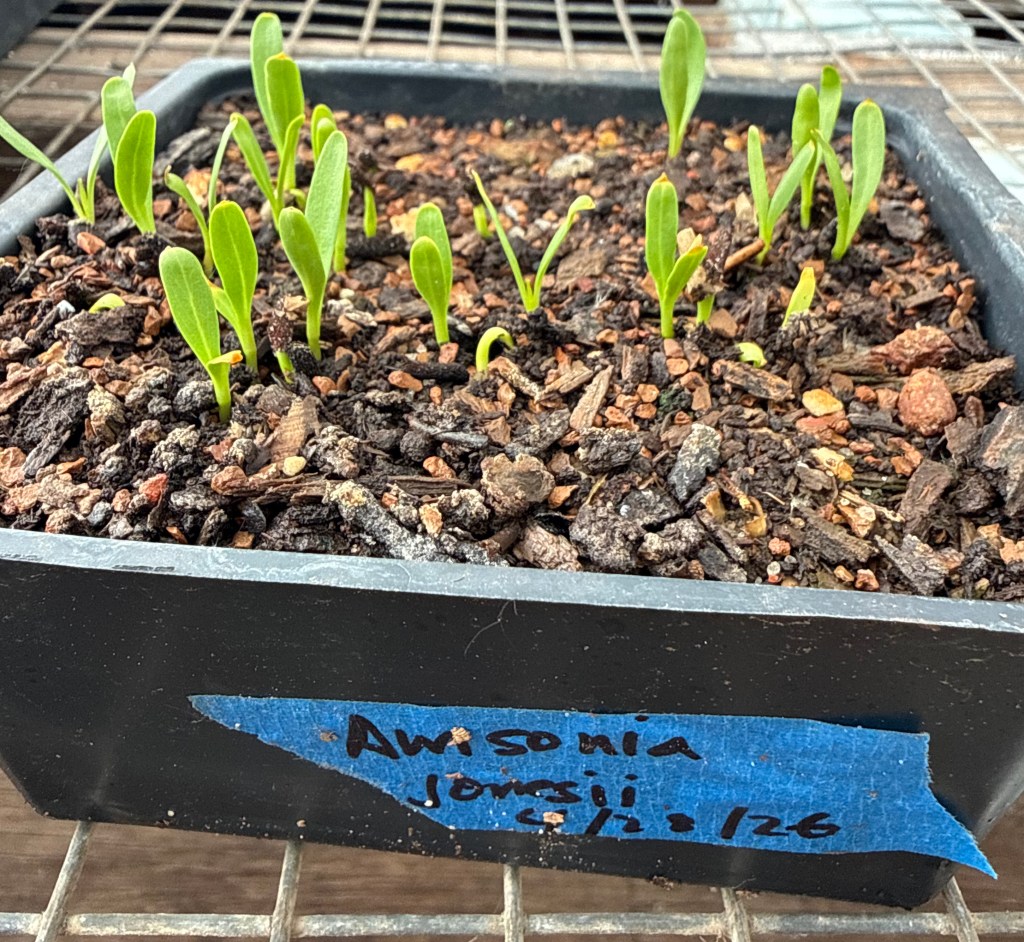
You can imagine that I was able to stretch $1000 like nobody’s business. I was able to purchase plants wholesale from my workplace, and that is where I spent the majority of the grant. I was so absolutely delighted to put hundreds and hundreds of dollars into that business and get plants that I had helped propagate. I got a few plants from that awesome nonprofit that summer–things we didn’t carry at the local nursery. I grew a bunch of plants myself, at home. I feel a lot of joy when I see them. I got plants at WOFR plant swaps… I “see” certain people when I encounter “their” plants, which is part of the magic of Wild Ones.
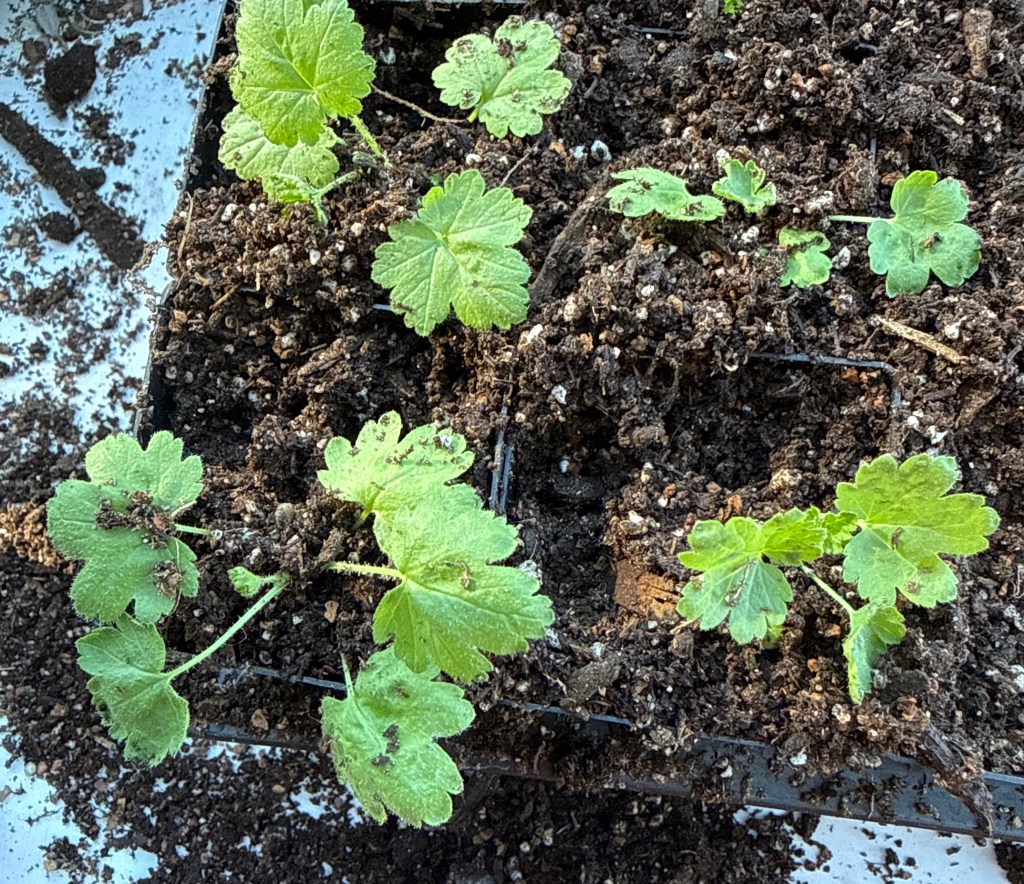
Of course… it has been two plus years since I received the grant, and I have planted more. My propagation has increased, as has the carefulness of my record keeping. I shadowed a master propagator at another nursery/farm last year, and I feel like I learned a whole new set of tricks (more on that in another blog post). I coordinated an order of bareroot and plug-sized native shrubs and small trees for my Wild Ones region from a local conservation district, and of course I ordered several myself. My son brings home “unsalable” (unplantable, struggling) plants from the landscaping biz yard, and they get TLC here (more than they would otherwise) and then get planted. (Or they die and get composted.) We continue to fill in, fill in, fill in.
Local growers…. Shortly after I received the grant, I started working as a propagator on the wholesale side of a local nursery which stocks a fair number of native plants and which uses no pesticides on site. I was also heavily involved with the propagation committee of the Wild Ones Front Range Chapter, organizing, running, and propagating for two major native plant swaps (we’re talking thousands of plants) in my region, as well as organizing and running multiple hands-on propagation events of various sizes and foci, not to mention countless seed collection and seed cleaning events and multiple native seed swaps (a few hundred species a pop). Whew. I’ve also been semi-stalking a small but mighty nonprofit native plant nursery an hour north of me, because they do everything so beautifully.
I want to circle back to the “purchasing from local growers” part. This grant was about establishing bird habitat with native plants. And I slipped in that that local nursery uses no pesticides on site (I couch it that way because I’m not 100% sure that all of their wholesale suppliers on the retail side are completely pesticide free–I think they do their best to be neonicotinoid free, but I can’t vouch for that extending to every single one of the plants they purchase for resale being pesticide free). It is my opinion, and I’m sure that it is borne out by research, that local growers likely use less pesticides than the big big big growers, and one thing I know for sure, it’s a whole lot easier to ask and find out about the plants they grew themselves. I have been incredibly grateful every day I have spent in pesticide-free nursery environments–for my own health, but also for the health of the other creatures invariably living there (insects, pollinators, birds galore, snakes, toads, and the dreaded bunnies and rodents). Neonicotinoid pesticides in particular are systemic, persistent, long-lasting, and deadly for wildlife, from bees on up.
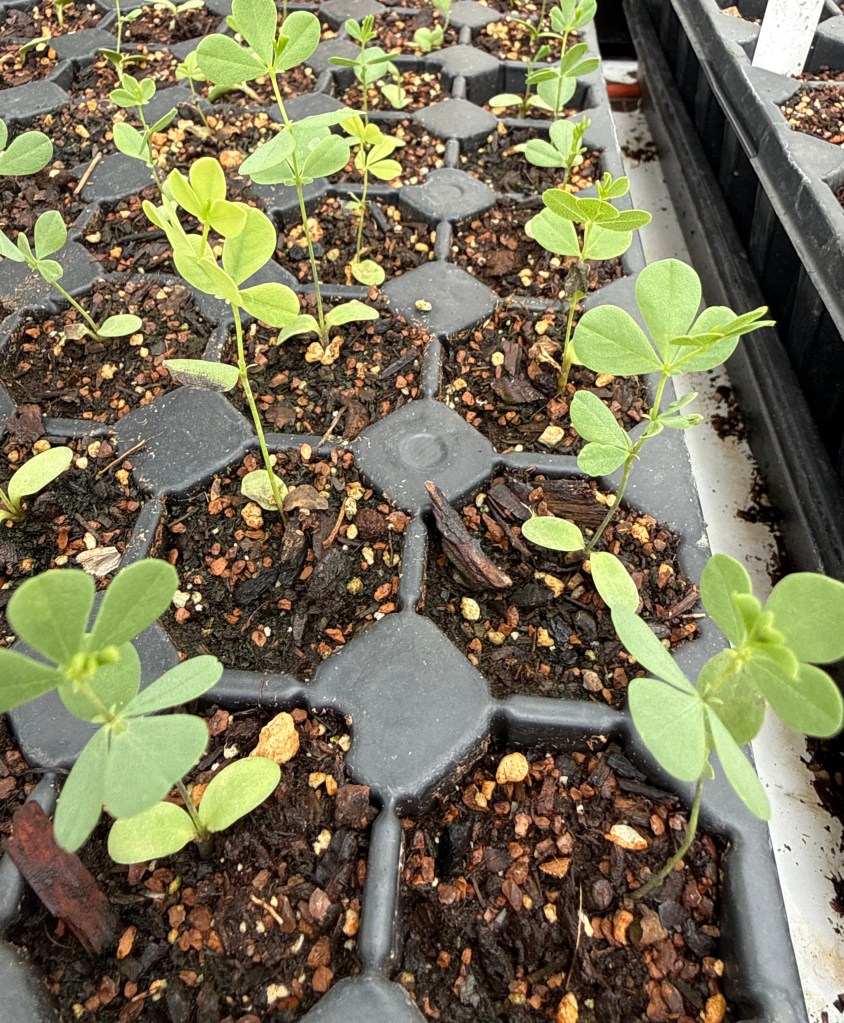
The second part of the “purchasing from local growers” that I should expound on is that I absolutely love being around plants. I love gardening, but I also love growing and I love the nursery environment (the pesticide-free version). We have a bottleneck in the supply of native plants in Colorado–there aren’t enough of them, and so they are hard to find and we aren’t getting enough in the ground. This is part of why I’ve been very involved in Wild Ones Front Range (board member, regional coordinator, organizer of countless events to help get more plants grown and in the ground). One of my next steps is the development of a native plant nursery: becoming a local grower myself. I won’t go into too much detail here, but expect to hear more this winter and next spring. It has been part of my longer range plans for several years, but yeah, the Terra Foundation Grant has been a good milestone on this path.
All text original, all rights reserved. Images are all mine, all rights reserved.


Leave a Reply