There are a lot of shall we say non-mainstream habits in my lifestyle, many of which I have been doing for years or decades. Most of these stem from a sincere desire to live in better accordance with the planet. Some also happen to be the way I was raised and/or happen to be thrifty.
A few years ago, someone formally introduced me to the concept of Planetary Boundaries, and it all clicked; it made sense of the interconnectedness of the multiple problems I was worrying about and pointed to some underlying unifying causes. (Some folks also refer to our messes as a polycrisis.) Some human activities are so wide-spread and happening at such a large scale that they are disrupting planetary life support systems, which are on the brink of tipping into greater and possibly irreversible chaos. I think it’s worthwhile sharing these concepts with other folks, because it helps provide a more comprehensible framework for what’s going on and what necessarily has to change.
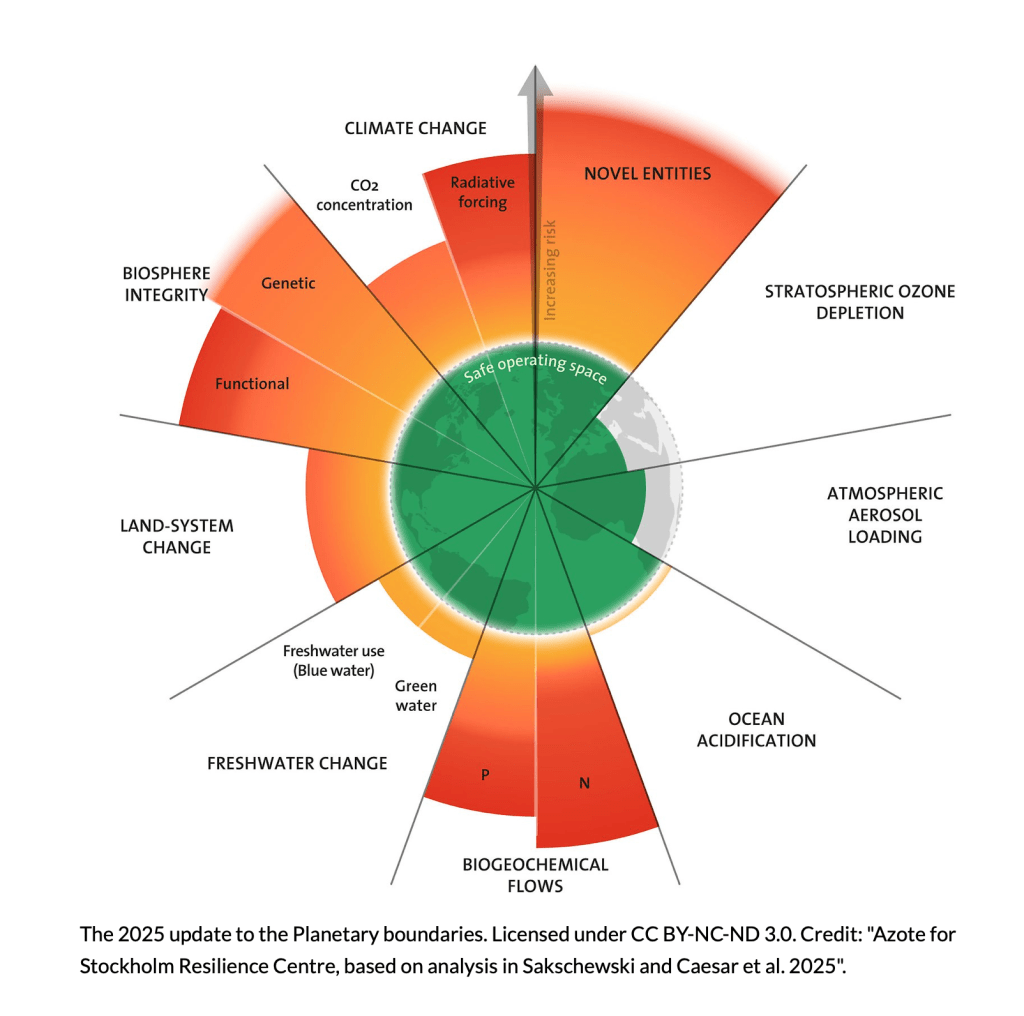
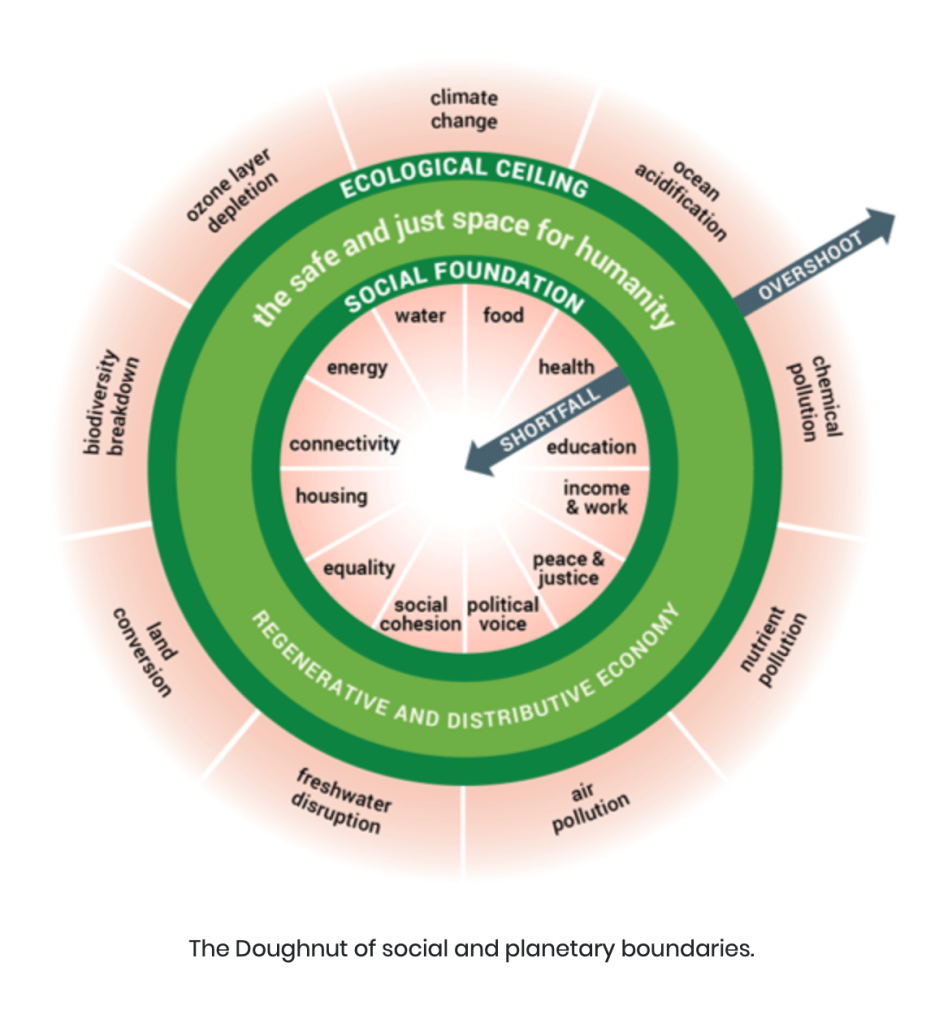
The best and quickest way I can think of to explain the nine individual planetary boundaries and the overall framework is to urge any reader to peruse the Stockholm Resilience Centre’s website (they developed these ideas in the first place) and watch any of the TED talks by the theory’s co-originator, Johan Rockström (https://www.ted.com/speakers/johan_rockstrom). I also encourage you to consider the work of economist Kate Raworth on Donut Economics, which provides a complementary framework for how we can all live and thrive within safe boundaries (check out her TED talk).
What are the planetary boundaries, where are we at with them, and what impacts do we see from crossing them, particularly in the American West, where I live?
| Planetary Boundary | Have we passed the limit? | Impact in the West |
| Climate change | CO2 emissions passed, radiative forcing passed | Hotter summers, warmer winters, less snow, more erratic precipitation, more erratic temperatures, higher evapotranspiration, more floods, more droughts; exacerbation of urban heat. |
| Biosphere integrity | Genetic (biodiversity) passed, functional (ecosystem function) passed | Insect declines, especially pollinators; bird declines; keystone species like beaver, bison, wolves not present at scale; brittleness of ecosystem function. |
| Land system change | Balance of natural ecosystems and human-controlled lands passed | Deforestation, topsoil loss, aridification, desertification. |
| Freshwater change | Blue water (surface and aquifer use) passed, green water (water stored in soil) passed | Depleted aquifers, low stream flows, dried out soil depleted of water/diminished in water storage capacity. |
| Biogeochemical flows | Reactive nitrogen production by humans passed, flow of phosphorus through land and freshwater systems into the oceans passed | Eutrophication and other forms of water pollution, air pollution, impacts on ecosystem composition. |
| Ocean acidification | pH of ocean waters passed | Ultimately impacts buffering of CO2 and speeds climate change impacts. |
| Atmospheric aerosol loading | Small particles in the atmosphere not passed, but regional variations exist | Rainfall patterns can be disrupted, temperatures can be affected, human health can be affected. |
| Stratospheric ozone depletion | Decrease in ozone levels in the upper atmosphere not passed | Still vulnerable, tied to other activities. |
| Novel entities | Synthetic chemicals, heavy metals, plastics, radioactive materials, genetically modified organisms passed | Variety of impacts depending on the entity. They are everywhere and hard to remediate. |
This is the start of a series which will tackle the links between gardening/landscaping practices and planetary boundaries, with recommendations on how to shift your practices.
Did you know about Planetary Boundaries? What about them concerns you? What are you seeing? Are you doing anything about them? If so, what?
Did you watch any of the TED talks? What ideas had the greatest impact on you?
All text original, all rights reserved. Images are screenshots of websites; the owners of those websites retain those rights. The table is drawn from text from the Stockholm Resilience Centre’s website. I urge you to visit their site and read their research.


Leave a Reply