This is part of a series to tackle the links between gardening/landscaping practices and planetary boundaries, with recommendations on how to shift your practices. This is the second post in the series, with recommendations specifically related to gardening actions related to biosphere integrity, both in terms of biodiversity and overall ecosystem function.
| Biosphere integrity | Genetic (biodiversity) passed, functional (ecosystem function) passed | Insect declines, especially pollinators; bird declines; keystone species like beaver, bison, wolves not present at scale; brittleness of ecosystem function. |
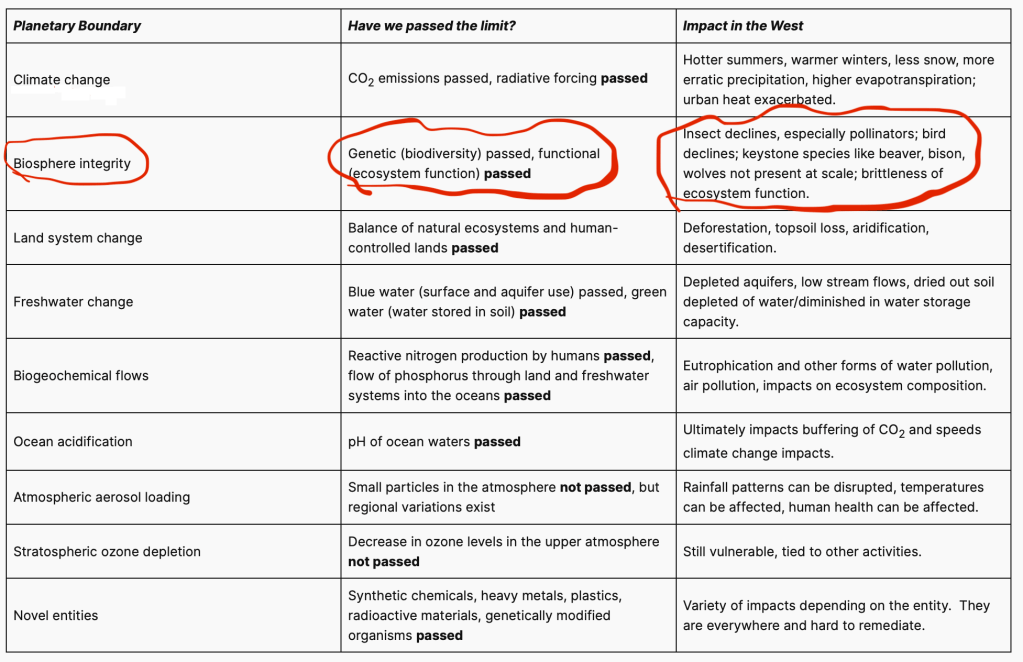
The Stockholm Resilience Centre attributes the cause of biosphere integrity loss to loss of “species, ecosystems, and ecosystem functions.” Through pollution, land use change, and over-harvesting or direct eradication, we are losing species and populations of every type of living being on the planet at an unprecedented rate. We are decreasing the area of specific types of ecosystems, like alpine tundra in my region, tropical rainforests, arctic tundra, and more. We take for granted that these ecosystems and living beings and what they do for life on Earth: providing clean air, recycling freshwater, providing food for human beings and other life, recycling wood and other organic wastes, and more.
The impacts we feel in the American West include insect declines, especially pollinators; bird declines; keystone species like beaver, bison, wolves not present at the scale and impact they once had; brittleness of ecosystem function.
It is my opinion that some of the planetary boundaries are easier for people to see and understand, and some are harder. While we can’t “see” greenhouse gases, increasingly, we are seeing extreme weather that has been many times more likely to occur because of the blanket of heat-retaining gases in the atmostphere. Many people seem to understand that species loss in the form of extinctions leads to lower overall biodiversity, although with shifting baseline syndrome, we may not even realize who is missing. I would imagine that most people do not truly understand all the ecosystem services that a healthy environment provides for us, however, and they may not understand at all that the myriad of creatures out in the world are required to be present in wide diversity and large numbers for these ecosystem functions to happen.
An ecosystem function is a biological, physical, or geochemical process which supports the continuation of life. Examples include photosynthesis (on a global scale, referred to as net primary productivity)–this is the transfer of energy into plants; then the transfer of that energy cascades through food webs. Nutrient cycling allows for the recycling of necessary elements from one organism to another. Decomposition is another form of recycling which removes dead biomass from ecosystems and transforms it into soil, nutrients, and other materials which get reused. Water cycling and equilibrium of atmospheric gases are additional processes which recycle (see a theme?) and support life.
When critical species or populations which support these functions decline in number or go extinct, ecosystem services (the direct benefits to humans and other forms of life from these functions) are degraded. I’m embedding links within the table below on how to do more or learn more about achieving the action.
In the table below, I have suggestions for what to do to support biodiversity, provide habitat, and to include ecosystem services in your landscape. There are a lot of links with a ton of resources–I encourage you to click through, check things out, and maybe pursue some of these choices yourself.
| What I do | The impact |
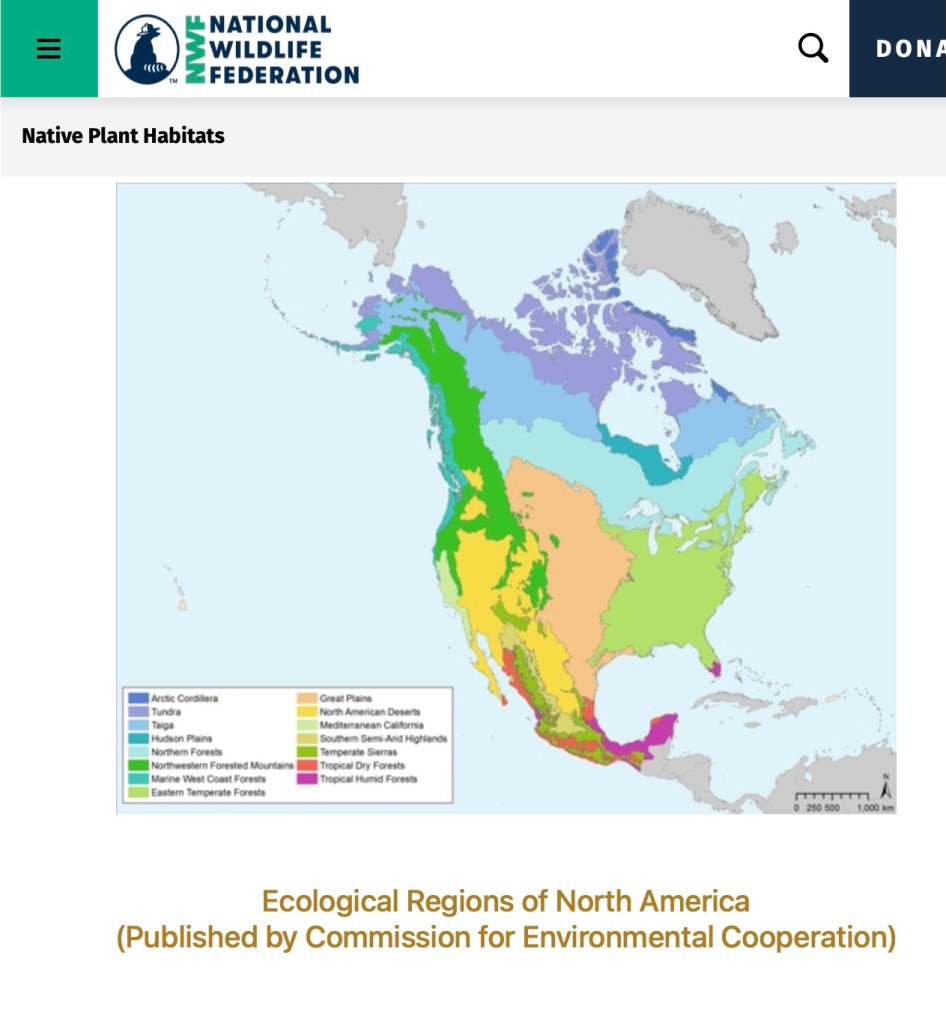
| Plant native plants | Plants from my ecoregion better support insects, birds, and other wildlife in my region. Insects and birds have faced big biomass and biodiversity drops, and creating safe places for them to feed and shelter and reproduce helps. |
| Reduce my water use | The less water I use, the more water is left in Boulder Creek, the Colorado River, and more, supporting riparian and riverine life and wildlife in general. |
| Practice rain gardening | By sinking as much of the precipitation that falls on my yard as possible into my soil, I reduce runoff, help recharge groundwater, and help support balanced year round stream flows. |
| Avoid (don’t use) pesticides | By avoiding herbicides, insecticides, rodenticides, etc. I am making my yard safer for all insects and keeping poisons out of the food web. |
| Remove invasive plants | Plants identified as invasive species are known to spread, to squeeze out native plants, and to cause harm to ecosystems, often by reducing the space for plants which support insects, birds, and other wildlife. |
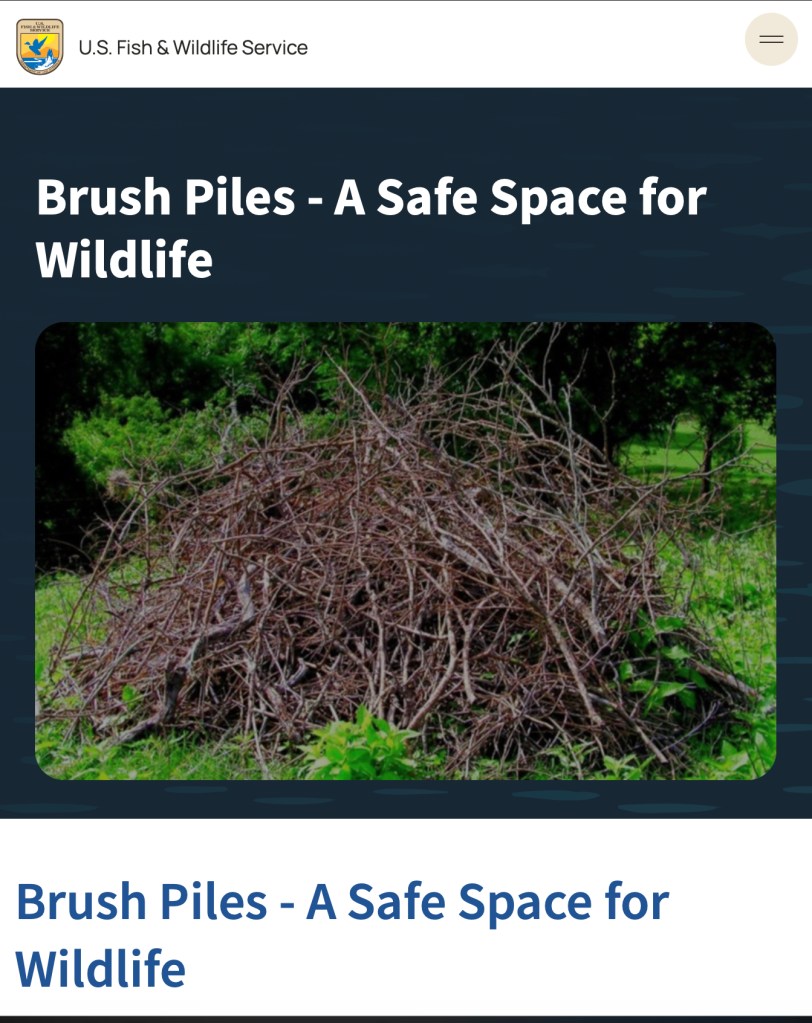
| Create refugia for insects, birds, amphibians, reptiles | We have a brush pile, a pile of old broken pots, a pile of old bricks, and many dead logs in contact with the soil. All of these create shelter for small creatures like wrens, toads, mud daubers, and beetles to live. |
| Reduce consumption and wastes | Though it happens outside of our yard, single-use (disposable) items consume resources which can use energy and pollute unnecessarily, reducing and degrading habitat elsewhere. We have worked to reduce our household consumption of goods and to buy secondhand when we can and donate reusable things ourselves–this goes for the garden as well. Pots and trays get reused. “Spent” media gets mixed with excess soil from gardening to pot up woody plants. Tags get reused. Bags for stratification get washed, sanitized, and reused. |
| Conscious food choices | We are vegetarian (mostly vegan), and we consume as much organic, pesticide-free, and/or local food as we can. The Bee Better Certified program from Xerces is another excellent resource to check out. Growing some of your own food–from produce like tomatoes, to herbs, to perennials like asparagus to edible native plants (like bee balm) and fruit (like grapes and currants)–connects us to our yard. |
| Participate in community science | I am an almost daily observer for eBird and the Garden for Birds project. I submit observations of insects, plants, and more to iNaturalist. I am a precipitation observer for CoCoRaHS. All of these help scientists better understand what changes are happening and why. |
| Propagate native plants | I am trying to help get as many habitat-forming, wildlife-supporting, water-conserving plants as I can out into the world. Some of this is in my own backyard. |
| Talk about what I do/educate others | I write for my Wild Ones’ chapter’s newsletter, I write occasionally for the national Wild Ones Journal, I give talks, I lead workshops, and I support others in doing the same in trying to promote urban habitat gardening. This often escapes my yard. 😉 |
All text original, all rights reserved. Screenshots come from the linked websites; those organizations retain all copyrights. The bottom table is original. All rights reserved.


Leave a Reply