It’s been a hot minute since I last wrote a blog post. Why? Life. Introspection. I didn’t want to write and publish just for the sake of it. I think I’m ready to share what I’ve been thinking and doing in the 21 months since my last blog post.
First and foremost, yes, I’ve been writing. I’m a regular contributor to the Wild Ones Front Range Chapter newsletter. Here are links and a list of all my articles (lead author, co-author, or contributing author) for our newsletter; not surprisingly, my blog writing started diminishing not long after I joined the newsletter.
Your Landscape Actions Can Actually Save the Planet!
Compost and the Native Plant Garden
Plant Spotlight: Rocky Mountain Juniper
Questions to Ask a Native Plant Landscaper
Visiting the Garden of a Living Legend: Jean Morgan
Multistem Native Trees and Large Shrubs for Colorado Landscapes
Rain Gardening: Thinking About Next Steps
Plant Spotlight: Gambel Oak (not a co-author, but I come up in the search because of a hot tip in the article which comes from me re propagation)
Connecting Native Plant Gardening and Rain Gardening
I also wrote a piece for the national Wild Ones Journal. (Precipitation Gardening, p. 21) I conducted a two-part webinar series for Wild Ones Front Range on soil and its impact on the environment through gardening practices. (The Dirt on Soil, Part 1; The Dirt on Soil, Part 2) I supported my adult son behind the scenes in organizing his own webinar for Wild Ones Front Range on rain gardening. (Harvesting Rainwater) I organized and supported one webinar (Seed to Bloom Propagation 101) and three online workshops on propagation for Wild Ones Front Range. (Contact me or the Wild Ones Front Range chapter if you are interested in getting links.) I participated in a panel discussion at one conference and gave a joint talk at another. I organized numerous activities for the Boulder and Broomfield Counties Region of Wild Ones Front Range. (See a theme here?) I worked on improving my propagation skills, my understanding of native plants, and my knowledge of dealing with noxious weeds. I also helped get the City of Boulder certified as a Bird City through Environment for the Americas.
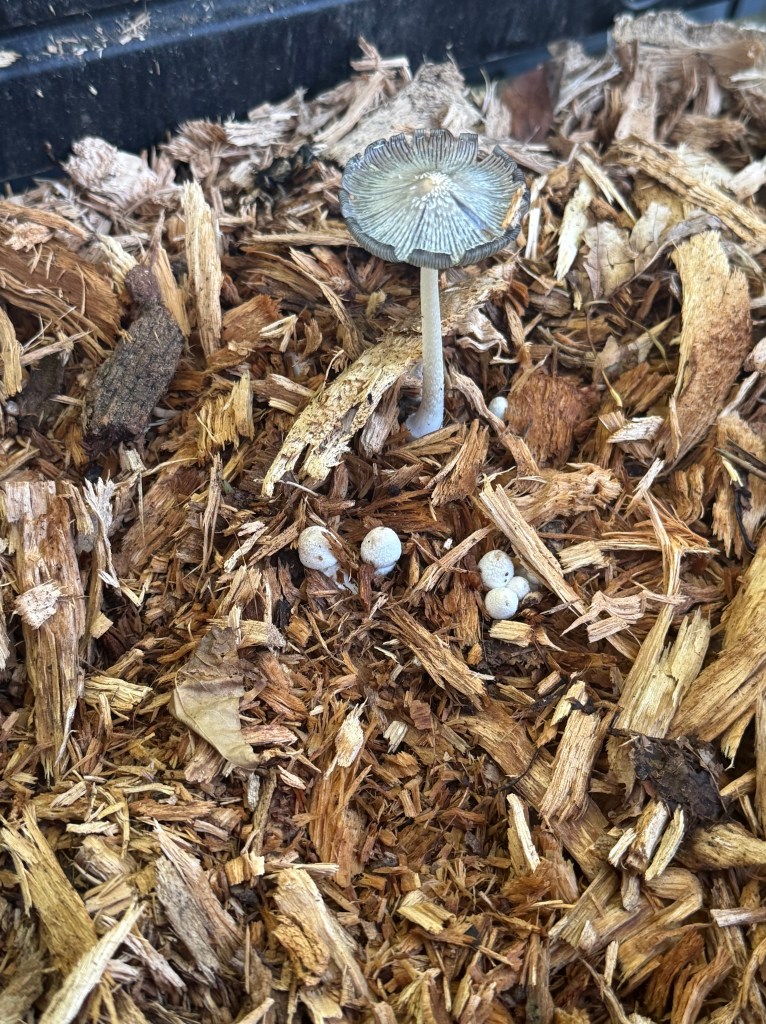
Beyond my writing and gardening endeavors, I’ve also partnered, parented, daughtered, and friended. I’ve protested extensively, initially with a friend and neighbor, and now on an ongoing basis with a local Indivisible group. Above all else, I’ve been learning: reading extensively, listening to webinars and podcasts, trying to delve more deeply into topics I care about. I’ve composted a lot, including in new and exciting ways with new and exciting people. I’ve gardened, of course: weeding, mulching, planting, propagating, dividing, and watering. I’ve become less hesitant about planting plants for the sake of it and less precious if I lose a plant. And that right there, folks, is a metaphor for life.
A lot of my recent reflections have been about the fact that while all the plant-related work I’ve listed has been valuable, it has been mostly unpaid. I’ve been giving and giving and giving (imagine the image of The Giving Tree here–a book I abhor, because I think most people don’t see it the way I do, namely that women in particular are often expected to give until literally death happens). I needed to ground myself. I needed to start saying no and reassess the professional skills I’ve been giving away for free.
More importantly, I reflected on my mission. What is my life mission? Is it to please others? No. I know what I want to do: I jokingly say I want to save the world, but that’s actually what I want to do. I’ve been driven for a long time by a desire to contribute meaningfully to the good of the planet and its inhabitants, from the plants and microbes and insects and birds and animals and soil to the people, in all the various ways we interact and organize ourselves. My skills lie in thinking and communicating (hence writing, speaking, teaching) and in doing, teaching, and demonstrating (composting, propagating, conserving water and other resources; leading active workshops or teaching in a related way).
I have goals, and I believe they are good goals. Giving myself away when everyone else asks won’t help me achieve them. Saying yes as frequently as I have won’t, either.
So, what do I want to do?
I want to write and speak and teach more about our gardening (native plants), conserving (soil, water, biodiversity, energy, resources), and electrifying efforts at home.
I want to continue doing (gardening and conserving) at home: our ⅓ acre lot is a laboratory for experimentation. I want to finish our hedge rows, grow more vines, shrubs and trees, support my spouse in creating a crevice garden, and grow more edible native plants. I also want to complete some projects: the flood swale in the side yard, an outdoor shower that waters plants near it, more greywater projects, and more experimentation with composting, including cultivating mushrooms in the yard. This obviously feeds back into my writing and speaking and teaching and demonstrating about the outcomes.
I want to do in my neighborhood: I would like to organize my neighborhood for better connection. I would like that to be a foundation for introducing more native plants and trees into our community, drawing inspiration from the Dunbar-Spring Neighborhood Foresters in Tucson.
I want to do in my community: While WOFR has been incredibly valuable in terms of learning, fostering friendships, and building connections, our chapter spans a huge area, and I would like to circle back and focus much much more locally, in my neighborhood, city, and county. Boulder, in particular, has the opportunity to take the lead in supporting native plant gardening in neighborhoods. I’m committed to actively participating in teaching and organizing these initiatives, ensuring that they are not solely based on my personal efforts and are not unpaid.
I can envision organizing an ongoing series of native plant gardening classes which are accessible to the public. These classes should be free, conveniently scheduled, and have the potential to become institutionalized. Instructors must be paid for their work. We need to support propagation in and for our local community, get the plants in the ground where they and we can thrive. I would also like to do more hands on teaching about rain gardening at homes and other locations, to help us with resilience in dry periods and reduce flashy, dirty runoff during wet times.
So. Committing to blogging again at least once a week, with scheduled publishing on Fridays. I have drafts of seven more articles in the pipeline, and prompt to begin another fifteen, a few of which are multi-part. (I have many THOUGHTS when I am gardening, propagating, composting…) I’ll check back in about three months and see how this is going. Feedback is welcome.
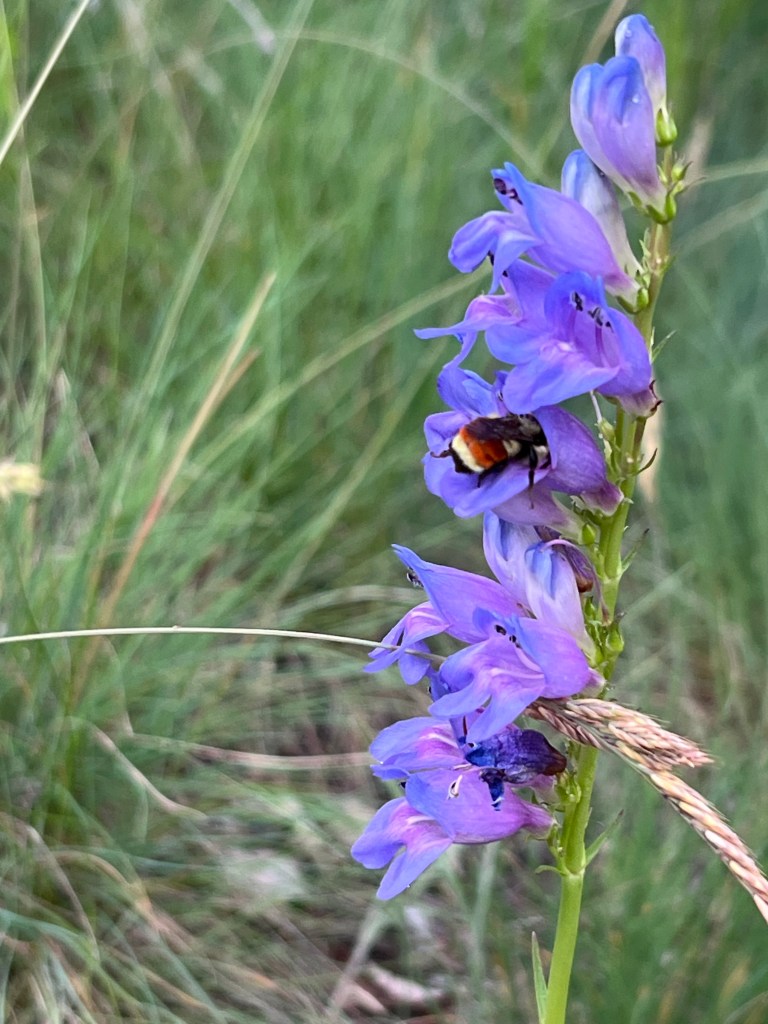
All photos mine, text original, all copyrights reserved.


Leave a comment