I’m still working on the next post in the Terra Foundation Grant series, don’t worry… it’s a lot of information to organize, and I’ve had an action-packed few weeks plus some time just thinking. I thought it might be more useful to take a moment to check in on where I’m at after a trip to Arizona, the election, and various and sundry other passings.
Warning. This is long.
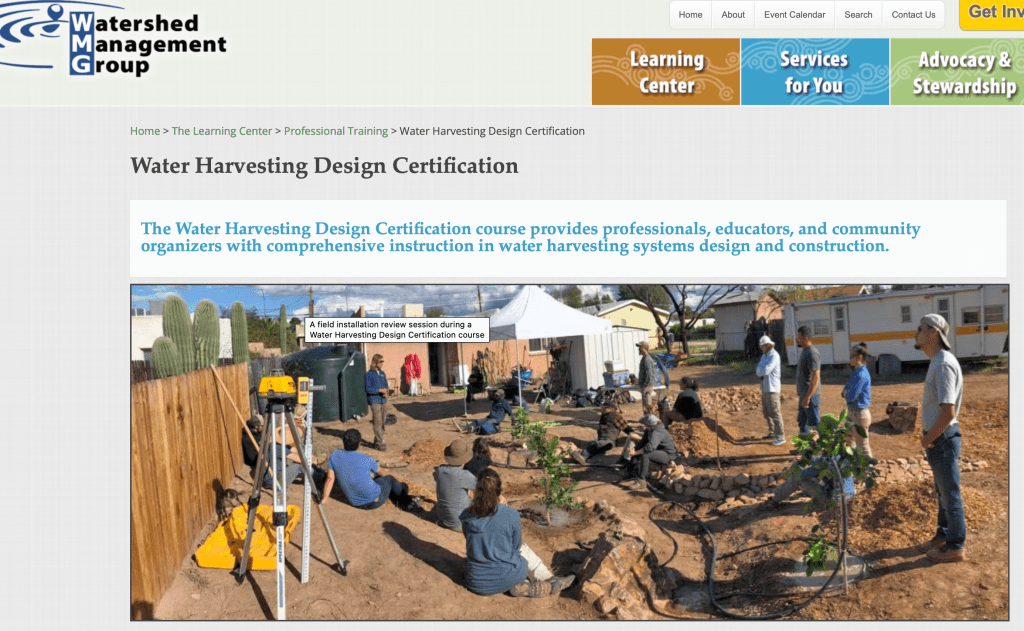
A year or so ago, I traveled to Tucson, Arizona to attend a water (precipitation) harvesting certification course at the Watershed Management Group. To my knowledge, this is the premier such training in the United States. The WMG is a nonprofit organization which works on sustainability centered around water (… but… it’s so much more). I think renowned water harvesting Brad Lancaster was an inspiration for the founding way back in 2003, but I’m speculating; the founders met during a watershed management masters program at the University of Arizona. (To be clear: Brad does teach a workshop during the training, and the tour of his neighborhood and home were a highlight for me in the course.) I came back to Colorado raring to go, and… I hit a brick wall.
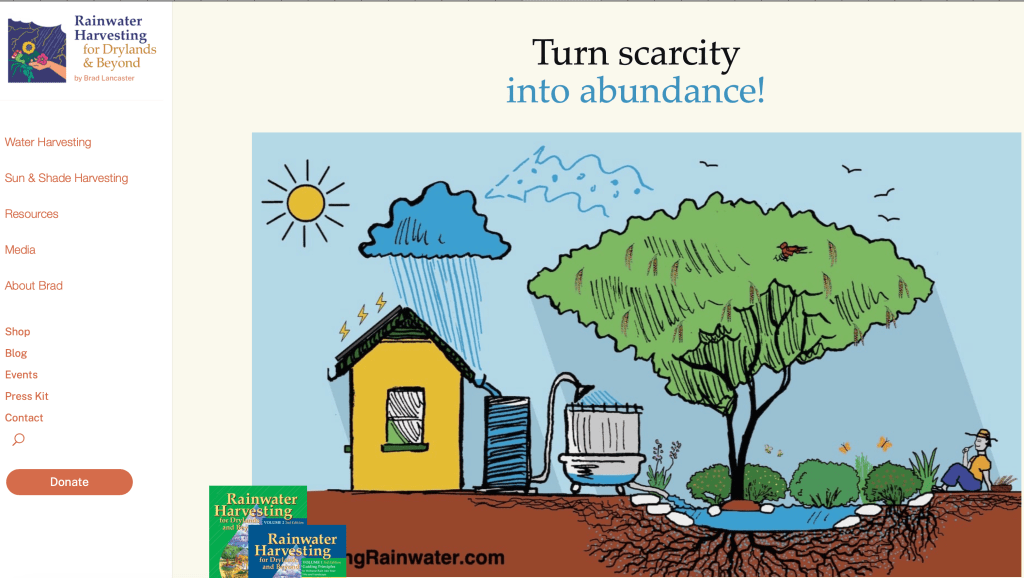
The laws and culture around water and conservation in Colorado differ drastically from Arizona. In Arizona, harvesting runoff from the street is legal. Harvesting rain into large cisterns and tanks is legal. Greywater distribution to the landscape is legal. Composting toilets are legal. None of that is legal in Colorado (okay, there are some little niggling exceptions, but by and large, Colorado law makes all of this difficult, constricted, dysfunctional, and/or costly). In many locations in Arizona, municipalities fine people who have irrigation runoff from their property to the street (so does Las Vegas, Nevada). Here, there’s no such law or culture. We live in a lawn culture, and much of the rest of the Southwest (Arizona, New Mexico, Nevada) does not. While rain harvesting is still a growing and not quite mainstream thing in Tucson, lots and lots of people do it. The practice and the practitioners are pretty much nonexistent in Colorado, and those who know about water harvesting misunderstand many of the principles.
I had a terrible month mid-winter 2023-2024. (I broke my dominant hand’s wrist biking; I hit a patch of ice. A teenager hit us driving in a head-on collision and totaled our beloved Nissan Leaf. I had orthopedic surgery on said wrist and months of physical therapy to regain as much range of motion and strength as possible. I developed a pretty horrible ulcer from NSAIDs from the whole wrist saga.) It forced me to begin to reexamine what I was up to professionally and personally because I went through an intense period of trauma and pain, and all the things which had previously been “tolerable” became too much.
I tried working with an HOA (homeowners association) and a municipality on water harvesting projects, and I learned that right now, those are too big and too unwieldy for me. (The HOA really had/has an ice problem, and I don’t believe the members truly understand the purpose of precipitation of harvesting and where it can and should be used and where it can’t. I will also say that working with folks who make decisions via unwieldy committees is not for me. The municipality situation was one in which I was not the lead on the project and I did not have the opportunity to do an infiltration test, dictate fill material, or dictate plantings… big lesson learned there. I need to work small with individuals who are getting their hands dirty in the projects before I work larger.)
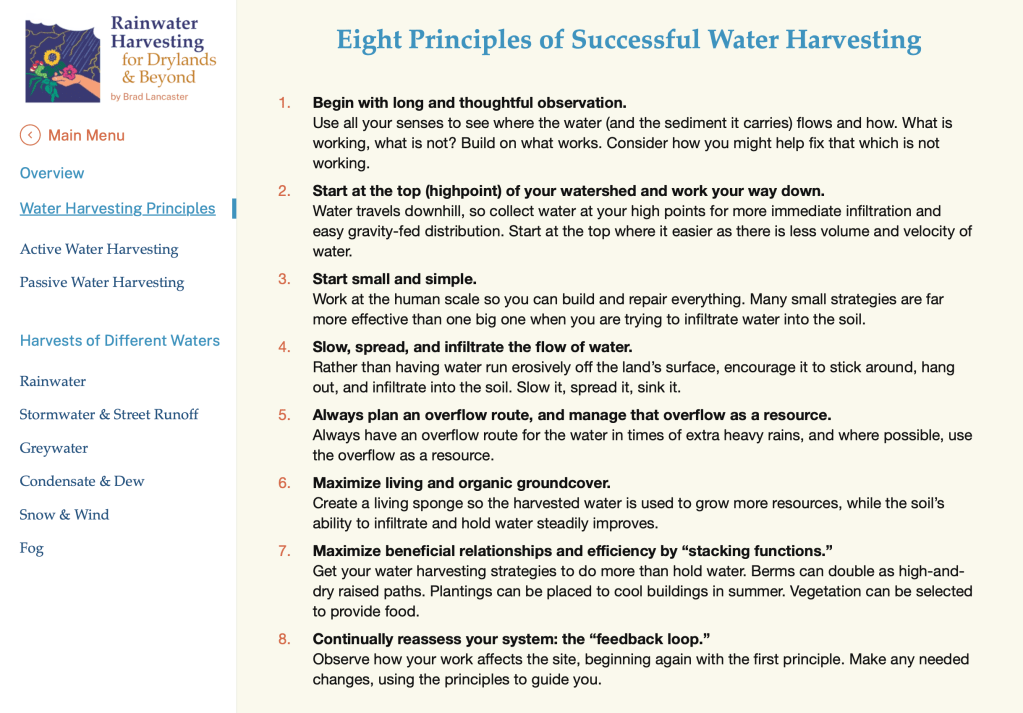
My son, a recent graduate in landscape architecture as well as a native plant master, traveled to Tucson to do his own certification with the WMG. I made arrangements to travel with him and audit the course. It gave me the opportunity to reconnect with WMG staff, ask deeper questions, and reexamine my values around this work. What got reinforced in this regrounding of myself was that I really need to work at the community level; that is the work that both WMG and Brad Lancaster do which speak to me. Brad Lancaster says to start small and simple; that is by building precipitation harvesting basins (generally from roof downspouts). He also says to start with long and thoughtful observation. So I’m trying to live that. Going forward, my personal need is to work with individuals and non-profits on harvesting rain from their roofs in their yards. Not with HOAs. Not with folks interested in harvesting water from the street when they haven’t maximized the easiest, most abundant, cleanest water first. I need to be braver about “proselytizing” about water harvesting and what it means; there’s far too much confusion in Colorado about what it is and how it can and should be used. I also need to document and communicate the ins and outs of our climate in Boulder, Colorado; I really saw that folks in Tucson have dialed in and know their climate. I clearly see and understand that people here have a lot of misunderstandings about our climate and flora (eg, do you know when Boulder, Colorado’s dry season is? it’s winter). I have started connecting with local groups focused on environment and equity, and that speaks to me much more strongly than HOAs and government. I need to work with folks who will actually be participating in the projects, not looking for labor to carry them out. Before you can run you must walk.
I also reemphasized within myself that that native plants for urban habitat are where it’s at for me, and this also encompasses the best of my strengths, skills, and training. I stepped up in my leadership within a conservation organization in my region, and I have eyeballed projects to further this. I honed my propagation skills working at a local nursery, and I have plans in that area. (Heh heh heh. More later.)
Working with activists and organizers feeds my soul. I have one life to live, and I’m pretty worried about the planet. I would like to effect change in Colorado around water harvesting and urban habitat, and to reiterate, I think it will take education, connection, and layers of multiple small actions. Precipitation basins are legal, can be low cost, and are relatively easier and more effective than anything else floating around Coloradans’ limited attention around this. There is a lot of misunderstanding about where basins fit into water conservation and habitat establishment; I just had a very frustrating conversation with someone high up in a conservation organization here who doesn’t understand how or why her organization should care about this. (“There are no native trees in Colorado which can be used in landscaping.” “There are no good native trees in Colorado.” “Native deciduous trees in Colorado require too much water.” Primal scream.) THIS IS AN OPPORTUNITY. Instead of being frustrated, I need to educate. If I know it, I need to share it. Some of the best habitat plants in Colorado, according to Doug Tallamy and Jarrod Fowler (NWF Keystone Plants), Audubon (Habitat Hero), and Xerces (see this lovely book) are trees (both deciduous and evergreen), multi-stem trees, and shrubs of various sizes. Many of them are indeed riparian (growing near or in water or requiring moister conditions). They can be watered via precipitation harvesting techniques and greywater. Boom. We need to deeply integrate what is native to this place and what makes our wildlife thrive, and we need to delve deeper into how to make those native woody plants thrive as well. Water-shedding landscaping techniques are not the way. OTHER LOCATIONS HAVE EMBRACED THEIR NATIVE FLORA. COLORADO IS ON THE VERGE AND NEEDS A LITTLE NUDGE. I AM HERE FOR IT.
Regarding the election and my regrounding there… I was expecting the results and bracing myself for it. It’s not pessimism; it’s just that the world felt so very 2016. My queer and BIPOC friends were also communicating the same vibe and fear that they expressed in 2016, and I listened. Yeah, I’m sad and disappointed, but I’m not surprised. (When people tell you who they are, believe them; we live in a deeply misogynist, racist, queer-phobic, classist, ableist, divided society.) I’m not throwing in the towel, though; if anything, I’m digging in. I feel more than ever that local action is where it’s at; this is where the work gets done. So. I intend to grow more plants, make more compost, create more habitat, talk more more more about all of that, and CONNECT. I am sometimes a reluctant teacher, but I know things, and I have information and methods to share. I love collaboration.
I felt so cradled in a cocoon of fellow activists during election week, when we were in Tucson in the workshop. I got my start in activism and organizing as a college student at the University of Colorado Boulder in the CU Environmental Center. I loved this, and I have remained engaged in my community in myriad ways ever since. However, at times, in my “normal” life post 20s, I have gradually felt/been made to feel like a freak. Since my break/crash/surgery/ulcer, I have been much more intentional about seeking out people who recognize me as the beautiful, intense, engaged person I am rather than trying to downsize me. I’m listening to my gut, listening to what kind of feedback about myself I get from my fellow travelers. I would much rather go where the response is YES rather than Kristine, you’re too much.
To that end… Here are the concrete things to come out of my regrounding. (The repeated use of this word is intentional. It all starts with soil.)
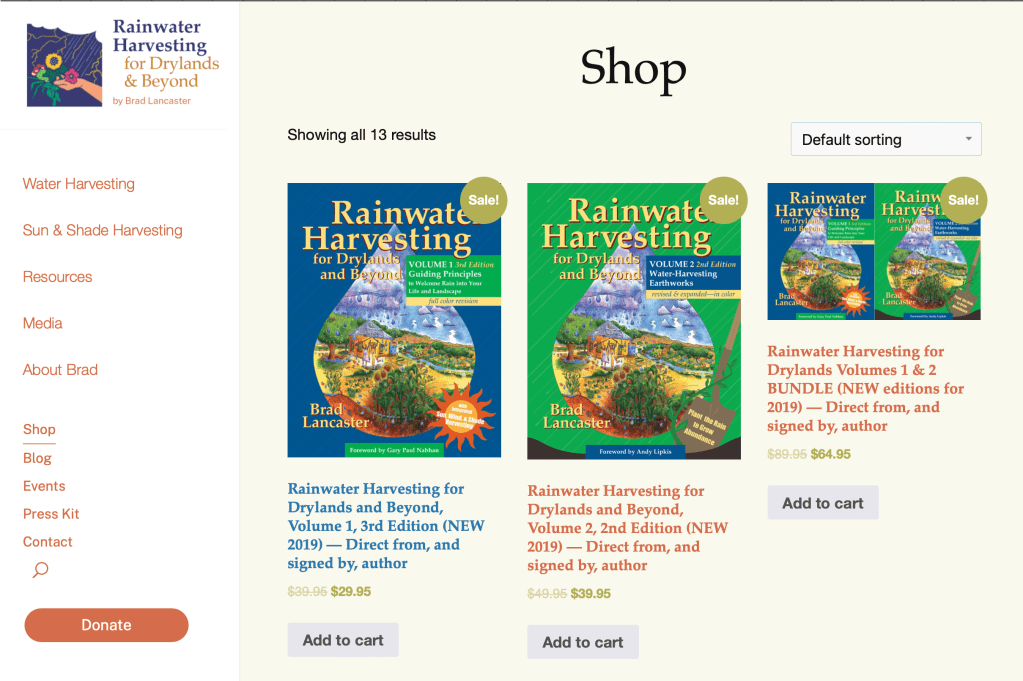


- I pledge to write about water harvesting and our special Front Range climate here after I finish the Terra Foundation grant series and do more leading and educating. Our local water harvesting group is going to start a book study of Brad’s books. (I felt too timid before, but going to a Brad Lancaster talk is simply not enough to become a water harvester. You have to deeply absorb his work and his principles, be in community about it, and GET OUT AND DO IT. You can’t run before you walk.) Contact me if you’re local and want to participate.
- I pledge to work with that aforementioned relative who just got certified to keep working our way through all the water harvesting projects at home. We have several projects in place, and a couple midstream. We need to finish those and tweak the others; all of our downspouts are now engaged with the land (rather than subsurface), but a couple more basins need to be built. Then, we would like to do some prelegal greywater harvesting based on the very sound, common sense guidelines from the state of Arizona (multiple qualified sources have verified that these are the best guidelines in the United States).
- I pledge to help others with roof to basin builds locally. Nothing dramatic. Brad says to start simple. I feel like if I can help people just get started, it will be a big boost to momentum.
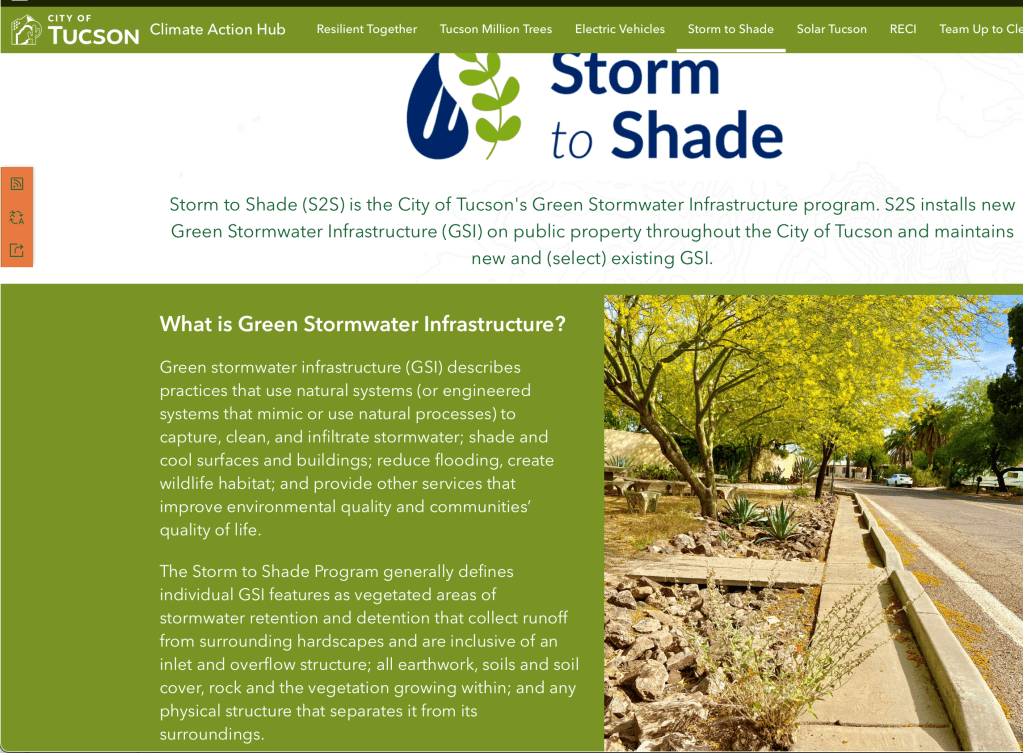
- I pledge to keep developing my propagation of native plants and matching them to this style of “irrigation.” The WMG has a Build Your Own Basin program. The city of Tucson has programs to support water harvesting on private property (check out these rebates and classes!) and public property (check out Storm to Shade). The more this gets normalized, the more HEALTHY NATIVE TREES AND SHRUBS I can help get planted. (And yeah, I want them to be native.)
- I pledge to keep propagating and promoting native plants. We just need MORE, and I will do my part. More than anything, I want to ensure that seeds, plants, and information are accessible to EVERYONE.
That’s it for now–about a month of intense feelings, thoughts, and experiences distilled into a single post. If you care to, let me know what you think.

 Climate Resilient Landscapes
Leave a reply to cololeslie Cancel reply