Reminder: I’m doing a series of posts over probably the next two months or so on the Terra Foundation Grant I received in April of this year. “The Terra Foundation Residential Grant provides $1,000 for native plant material to install a new garden where turf has been removed in a home landscape. The Terra Foundation is committed to biodiversity and water conservation.” The grant had extra requirements in six categories, and I will devote at least one blog post to each of those. In addition, I plan to do some reflecting on the whole process and what I have planned next for my garden.
This post’s theme: Removing existing non-native turf grasses from the area for your new garden. Non-native turf grasses include Kentucky bluegrass, perennial ryegrass, tall fescue, and fine fescues (creeping red, hard, chewing, and sheep). I’m going to break this into two posts: the first gets into the why and the how, and the second will get into what I actually did.
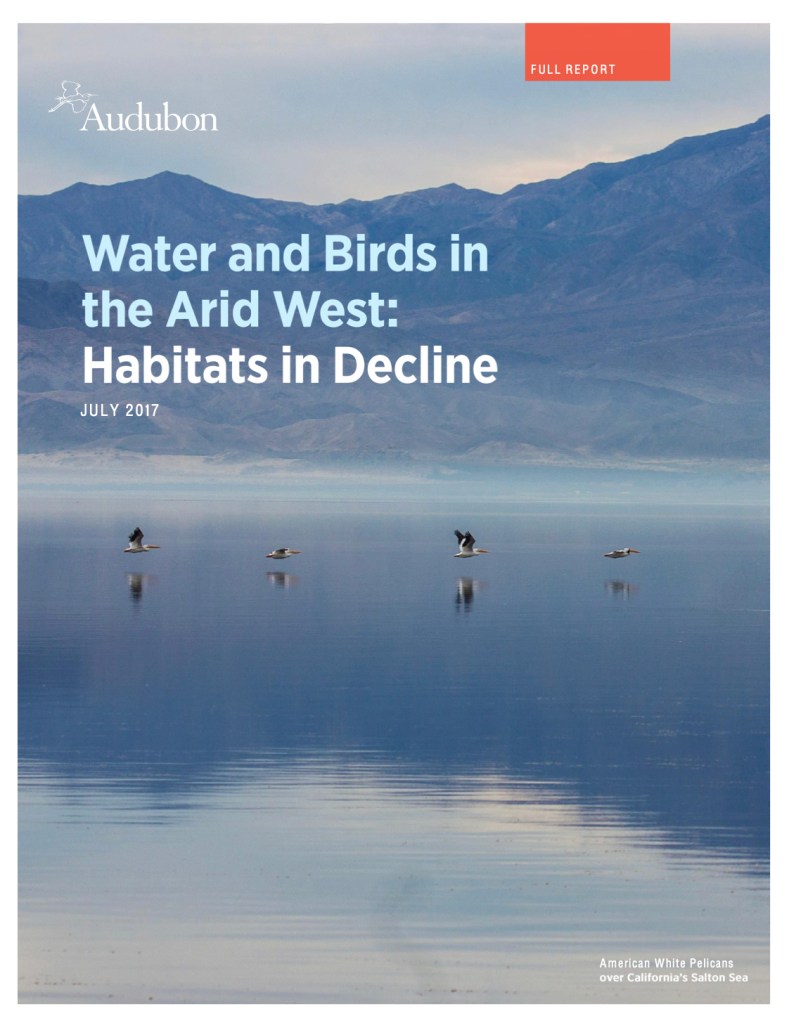
Let’s get the why out of the way. Why would a grant from a conservation organization focused on birds be interested in turf removal? Water conservation is a huge part of it. Audubon reported in 2017 that riparian habitat like rivers and lakes, while especially valuable for supporting birds and other wildlife in the arid west of the United States, are shrinking because of how we manage water. Water quality of what remains is also falling, again, impacting birds and wildlife. Twenty to thirty percent of the City of Boulder’s water comes over or through the Continental Divide from the Colorado River. (This is insanity and frankly unnatural.) Every drop of water I can avoid using on thirsty turf is another drop of water in that western basin or which stays in my local Boulder Creek. Beyond water conservation, turf provides very little to birds in terms of their basic needs (no food, no shelter), and many lawncare practices harm birds. Pesticides directly kill or harm birds, or they kill or harm insects they rely on for food or for feeding their young. Noisy, polluting two-stroke lawn care machines like mowers and blowers inhibit birds from nesting and thriving in lawn-dominated yards. Removing turf and replacing it with native plants with chemical-free landscaping practices is a huge turnaround in terms of providing food and shelter, and removing “discouragements”.
How to remove turf is the next big question. I’ve attended webinars, I’ve read articles, I’ve talked with people in the know, and basically, what I have to share is that there are tradeoffs and that no method is perfect. Here are the best resources:

Xerces Society
- Xerces has a quick overview of the methods and an in depth guide (40 pages) on how to carry each of them out, step by step. They cover solarization, smother cropping (aka cover cropping), repeated cultivation, sheet mulching, sod inversion (aka sod cutting and flipping), organic herbicide application, and sod removal.
- The table summarizes best conditions for particular sites, when not to use a certain method, what is needed to do it, relative cost, and other impacts. For example, solarization is good for flat, sunny sites and outperforms other methods, but is relatively expensive. Sheet mulching is good for shady sites and works better with transplants than with seeds. This is where I would start in thinking about what to do for a particular site, and I would consider my time, my budget, the area involved, slope, hours of direct sun, and condition of the current site (from lush healthy lawn to bare to totally weedy).
Wild Ones Front Range
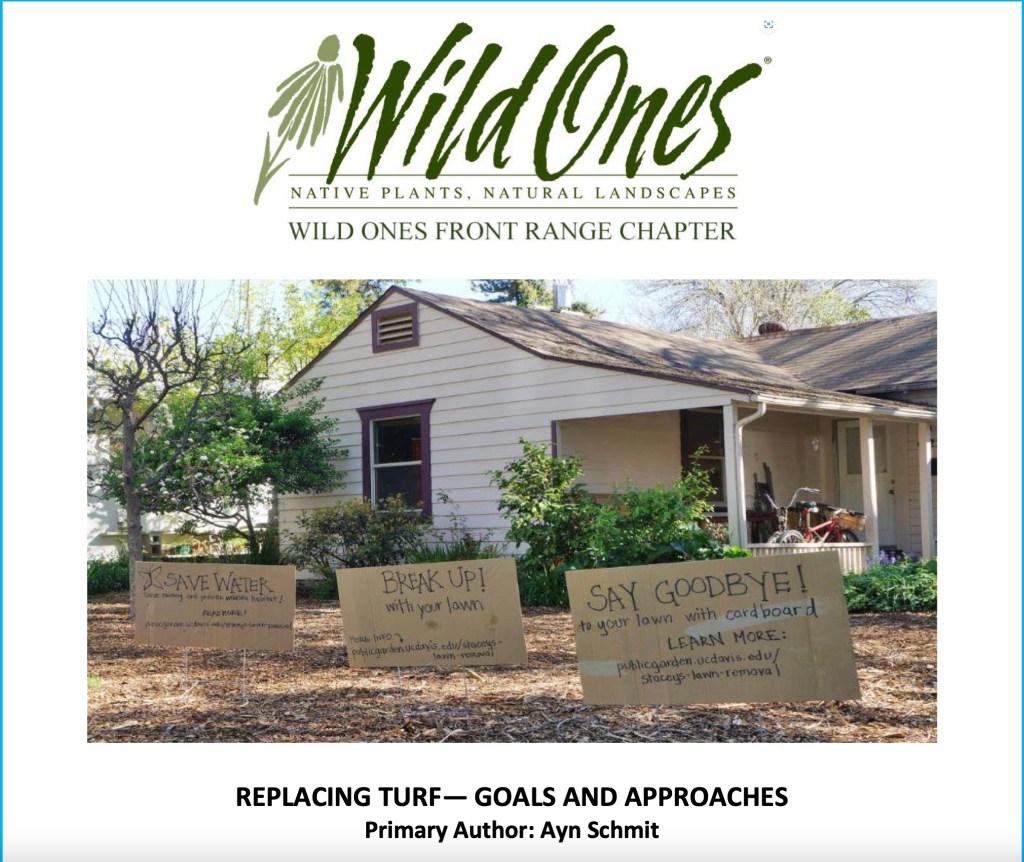
Wild Ones Front Range has a shorter guide on site prep (aka turf removal) that while shorter is specific to my region. To me, it feels like a good way of filtering the Xerces information for my climate, soil, and flora.
This guide focuses on sheet mulching (aka smothering), solarizing, and sod removal. There is a section about using glyphosate (also known as Roundup), prepared by a CSU Extension agent. I want to note that Xerces, the society for the protection of invertebrates, assessed the use of ORGANIC herbicides with ingredients including “clove, cinnamon, or citrus-based oils, or acetic acid.” The Wild Ones guide does discuss the drawbacks and collateral damage caused by glyphosate, which I think is important and responsible. Wild Ones Front Range also has a whole Coloradoscaping (think sustainable native plant gardening) page with tons and tons of resources for what to do once the lawn goes away.

Colorado State University Extension
CSU Extension provides numerous resources for what they call “lawn conversion.” (This link goes to a page of links and resources.) This guide from El Paso county includes the usual techniques (and leads with glyphosate, yikes!), but includes a new, unique one, they call “stress the lawn and plant native shrubs.” I kind of used this a bit in an area dominated by smooth brome, and I wish it were more talked about. Essentially, the idea is to dry out and shade out the grass over time.
Again, the original landing page has a slew of other links, including information on xeriscaping, design, installing native grass lawns, and water conservation.
Resource Central
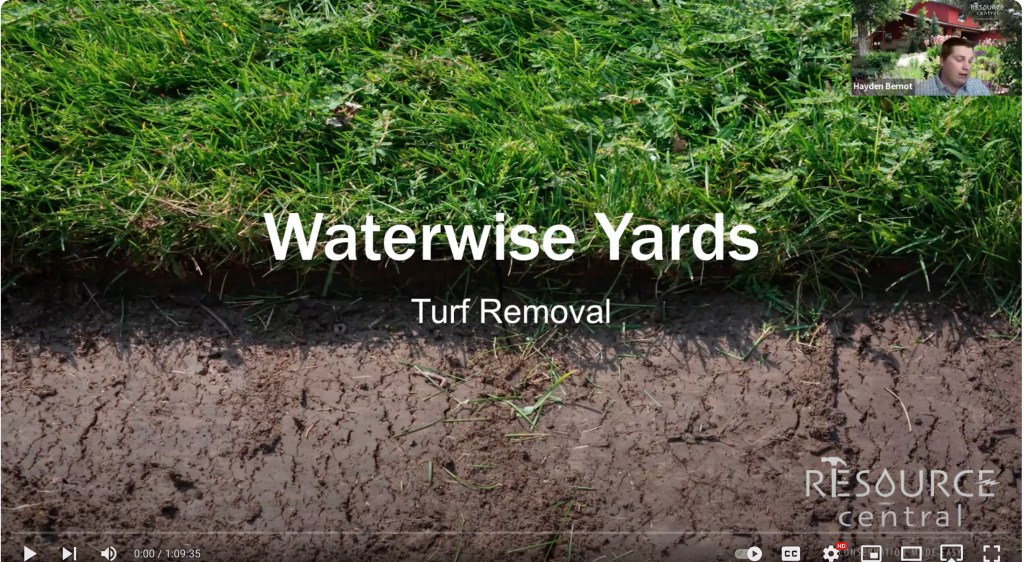
Resource Central, a conservation nonprofit in Boulder, Colorado, provides resources on turf removal, including seminars, videos, a sod-removing service, and incentives including free or low cost bundles of xeric plants (often including native plants, but shop carefully). They focus on three main methods: sheet-mulching, solarization, and sod removal. I love/hate the photos they include in this, because they focus on the end product; the ugly middle is not shown. (So it’s encouraging, but does it feel real?) Here’s a great video of one of their webinars going over these methods in detail.
In summary…
These are essentially the best resources for our region, for our climate, backed by science and by reputable organizations. In my next post I’ll get into what I did and why. I would imagine there are other articles, videos, etc. out on the interwebz about turf conversion, but these three nonprofit conservation organizations and one university extension service do not try to sell you anything; they simply try to make it as affordable and understandable as possible, with the lowest impact on the environment. If I were to add anything, I would say that talking to MEMBERS of these organizations and/or talking to a Colorado Master Gardener or extension agent would also be helpful.
Part 2 will come out sometime in the next few days.
 Climate Resilient Landscapes
Leave a comment