I said in the last Pollinator Post that the main point of amending with compost isn’t to add nutrients for plants; it’s to support soil health, water infiltration, soil texture, and soil structure. Let’s get into that.
Soil health is “the continued capacity of soil to function as a vital living ecosystem that sustains plants, animals, and humans … by performing five essential functions: regulating water, sustaining plant and animal life, filtering and buffering potential pollutants, cycling nutrients, and providing physical stability and support.” Ironically, the bacteria, archaea, protists, fungi, arthropods, and other invertebrates (aka, soil flora and fauna) who are ignored above are the organisms actually carrying that out; it doesn’t just magically happen.
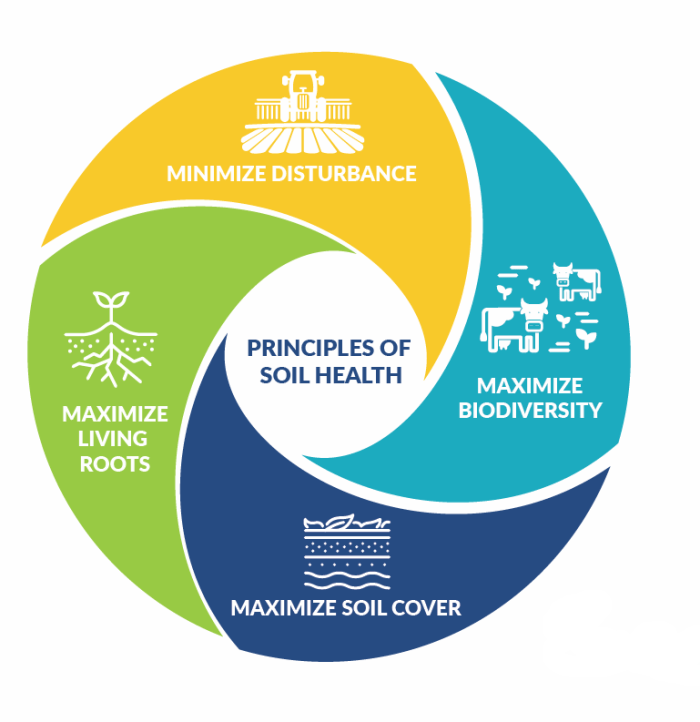
To achieve soil health, follow soil health management principles: maximize living roots, minimize disturbance, maximize soil cover, and maximize biodiversity. (Regenerative agriculture adds animals of some kind.)
Our soil in town tends to be quite modified from when this was all prairie. Building and digging result in rearranged soil horizons and compacted soil. This gives us less soil pore space, less organic matter, less capacity to infiltrate and hold water, less capacity to infiltrate air, and lower soil life all around. To deal with this and to activate and diversify the soil flora and soil fauna, I top dress (cover the soil around) my plantings and I mulch my trees with compost, leaf mold, and other organic matter. These materials give the flora and fauna both food and a place to live. In turn, the soil life and the gradually increasing soil organic matter deliver nutrients in a form that plants can use, help soil hold more water, help prevent erosion, support healthy roots, and more. I don’t dig in compost or leaf mold or disturb the soil–that’s unnecessary… fungi and soil fauna translocate it and aerate the soil at the same time, fixing the problem of compaction.
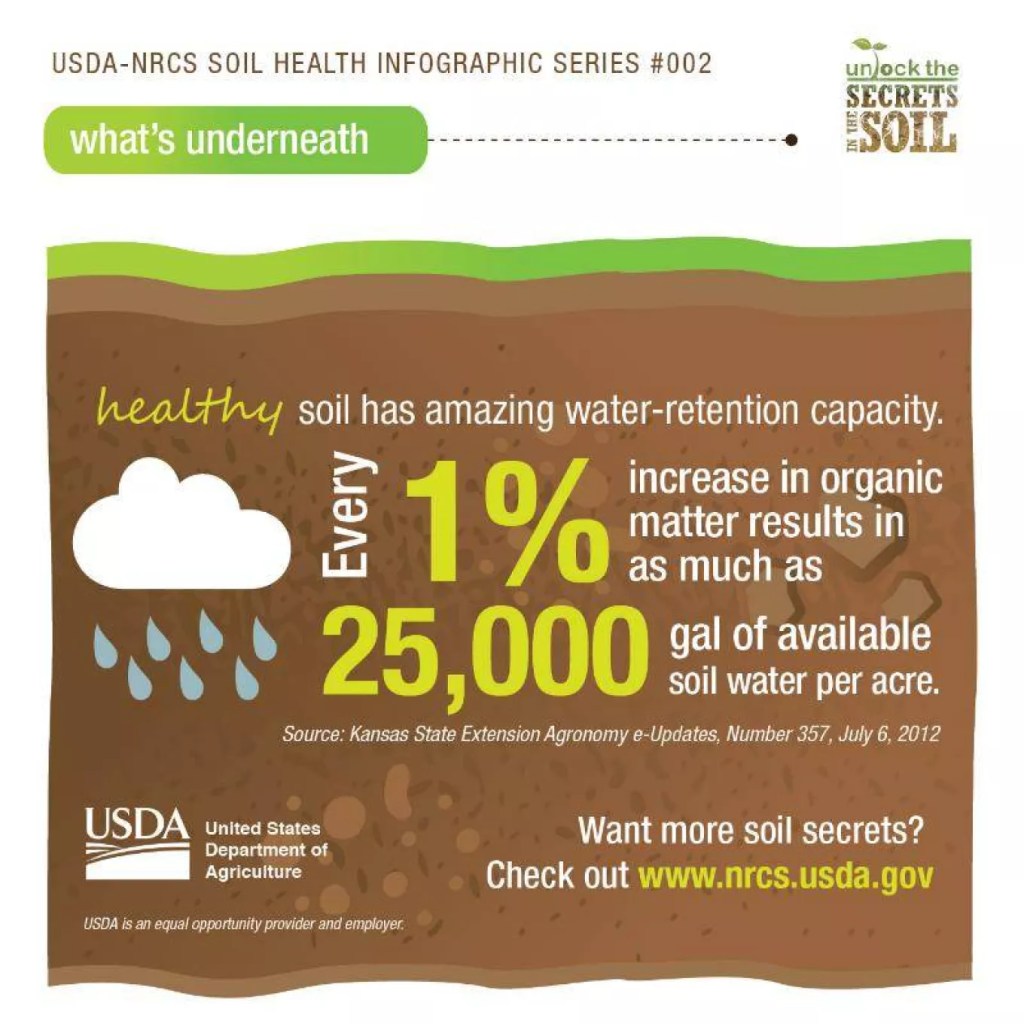
Over time, soil organic matter will increase, supporting more plants (roots!), animals, soil flora, and soil fauna. A 1% increase in soil organic matter stores over 20,000 gallons more water per acre. It also amounts to storing over 11,000 pounds of carbon per acre. This is a multiyear strategy in our cold, dry environment, which is why I compost so much and collect so many leaves.
Next week, I’d like to finally get into the how of doing leaf mold, the easiest form of composting.
 Climate Resilient Landscapes
Leave a comment