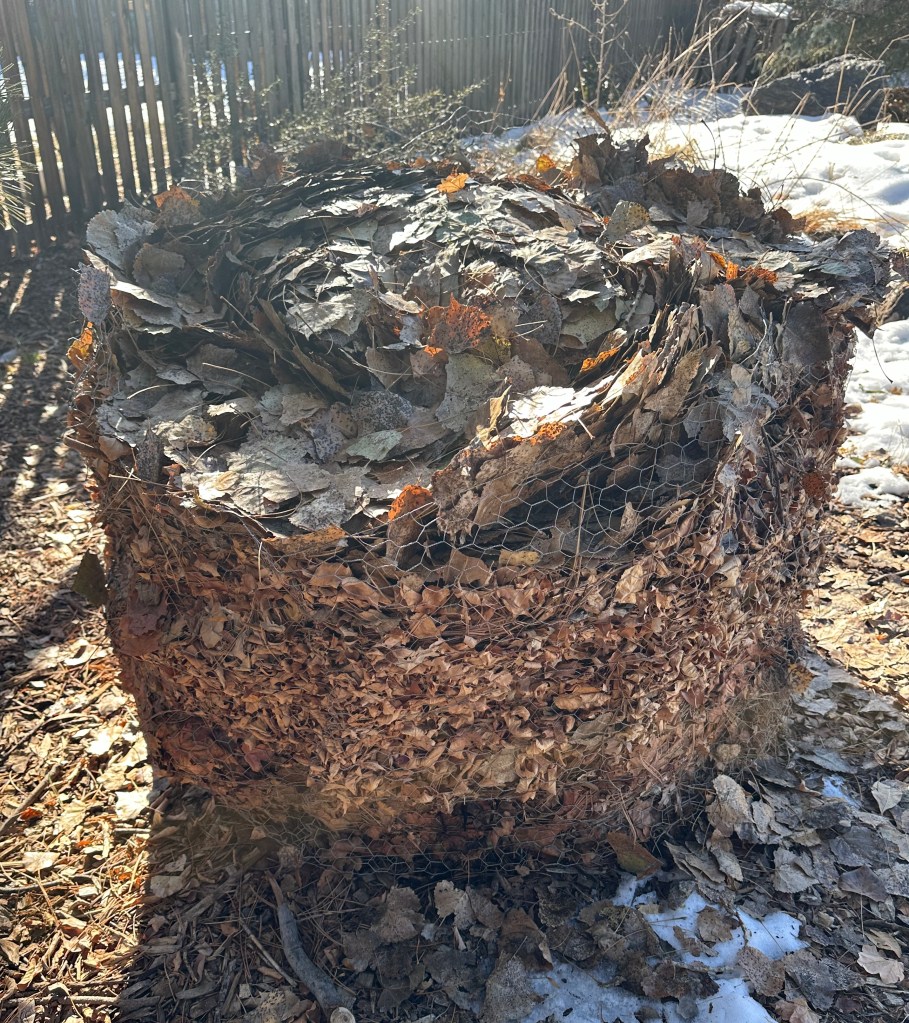
This is the second post in a series explaining why I have 50 leaf bags in front of my house. If you missed the first post about the financial angle, check it out here.
The costs that I gave for compost last week were for the cheapest stuff out there. If you’re growing things, you also want to know if you have good compost (good = won’t harm your plants, won’t pollute, won’t get you sick, and…?). “Compost refers to organic matter that has been biologically degraded. While Colorado requires that commercial compost be sufficiently composted to reduce pathogens and vector transfer … there is no standard regarding the compost’s state of decomposition.” Translation: compost is stuff that was once living that has been at least partially decomposed. If it’s sold here, it has to be broken down enough that disease-causing organisms are below a threshold number. Further, “When purchasing products, gardeners need to understand that there are no regulations about the quality of the product, salt content, or other beneficial or harmful qualities of bagged products. Use with caution, as many soil amendments sold in Colorado are high in salts!” (CSU Extension GardenNotes, the curriculum for Master Gardeners; look at #241 and #243)
If you purchase compost, look for analytics and feedstocks. In interpreting this, start with the US Composting Council guidelines. Generally, you want stable compost (not actively decomposing) which supports a high germination percentage of test seeds and produces healthy seedlings, is fairly neutral in pH, has low soluble salts, and has few contaminants. For feedstocks, look for plant-based compost (no manures or biosolids), or plan to use a lower amount/less over time in order to minimize salt issues. All three of the composts I mentioned in my previous post have issues: two use cattle manure, which is high in salts (the third makes no mention of feedstocks). One has no analytics at all. Two have high pH, have respiration out of the ideal range (they aren’t stable/done decomposing), and have salts out of the ideal range. One admits that seedlings grown with the product are stunted. Yikes. At least two of them document low contaminants and coliform bacteria, which is good.
The last thing that most compost labels will tell you is their “NPK ratio.” This is the percentage of nitrogen, phosphorus, and potassium it contains by weight. It’s good to know, but a little unfair; synthetic fertilizers also have these numbers prominently displayed, and because NPK is relatively low in compost (because the bulk of the volume is organic matter, water, and microbes), you may feel like you’re getting cheated. However, the main point of amending with compost isn’t to add nutrients for plants; it’s to support soil health, water infiltration, soil texture, and soil structure. (More on that next week.)
What labels often completely skip are all the other things you might want to think about, like bacterial/fungal ratio; and the presence or absence of PFAs, heavy metals, and other contaminants. A more fungally dominated compost may benefit perennials, trees, and shrubs, while a more bacterial compost may be better for annuals, vegetables, and turf. PFAs, heavy metals, and other contaminants (like pesticides) may come in feedstocks (particularly biosolids and manure).
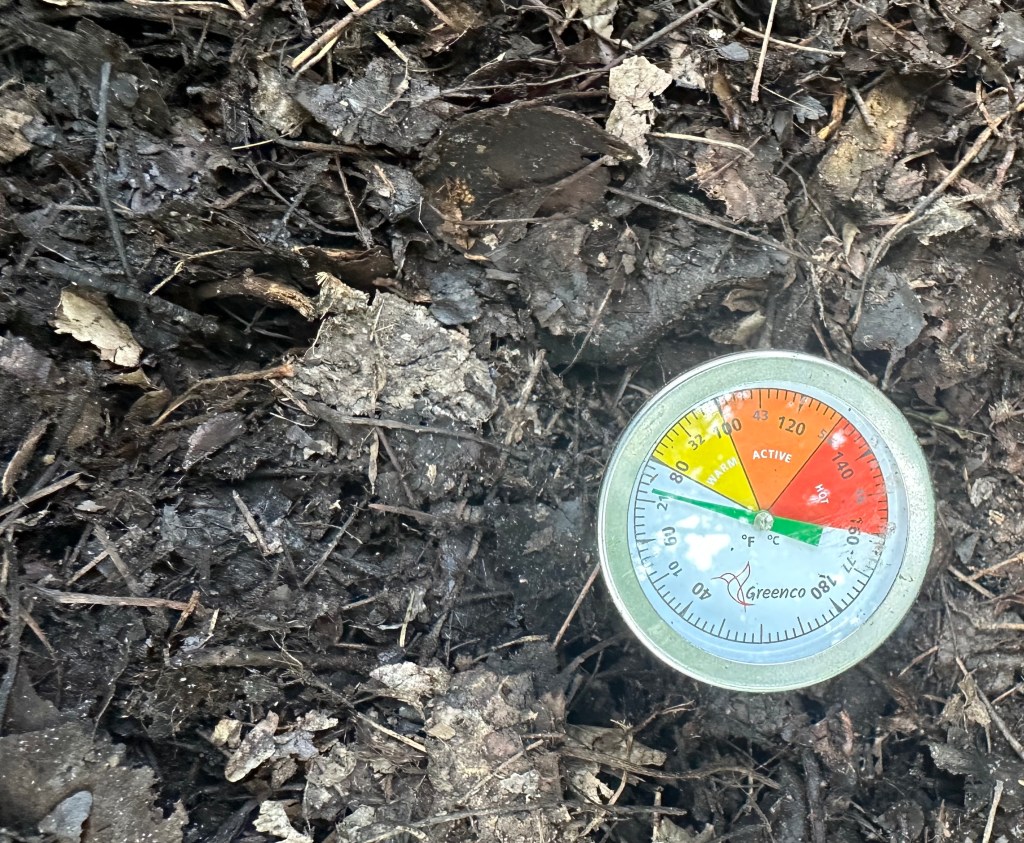
Leaf mold, the long, slow, cold fungal decomposition of leaves, yields a superior product. There are no contaminants as long as you can ensure that the leaves do not contain pesticides (in Boulder right now, many ash trees are being treated for Emerald ash borers). There is no risk of coliform bacteria or high salts. The pH of leaf mold is neutral to slightly acidic. Leaf mold can be used as mulch if is it not completely finished. It is an excellent support for soil fungi, who sequester some of the carbon from the leaves in the soil. It also supports soil fauna which help aerate the soil.
Next week: more on what compost does in soil.
 Climate Resilient Landscapes
Leave a comment